
Pacific & South Pacific region
Galapagos
The Galápagos Islands, straddling the equator 600 miles west of Ecuador in the Pacific, are among the few places on Earth where visitors can get a feel for what the world was like before the arrival of man. The archipelago’s 18 islands and 107 rocks and…
- 56cruises call
- 8ships
- 29ports
At a glance
56 current cruises call at the 29 ports Cruiseable lists under Galapagos, on 8 ships from 5 cruise lines. The busiest of those ports is North Seymour Island Galapagos, on 37 itineraries. The lowest lead fare across those cruises is $6,370. The lines sailing the most of them are Lindblad Expeditions (31), Silversea (11) and Celebrity Cruises (10).
Destination guide
Galapagos travel guide: Get up close & personal with exotic species
The Galapagos Islands, straddling the equator 600 miles west of Ecuador in the Pacific, are among the few places on Earth where visitors can get a feel for what the world was like before the arrival of man.

The archipelago’s 18 islands and 107 rocks and islets, undisturbed by humans until the whaling era, are today a protected wildlife sanctuary and a UNESCO World Heritage site.
They're also an ecological wonder and among the planet’s most isolated landforms, home to a huge diversity of animals, including giant tortoises, iguanas, fur seals, hammerhead sharks, manta rays, penguins, sea turtles and an abundance of exotic birds. Some of these creatures exist nowhere else, and most of them exhibit no fear of humans.
Megaships are not permitted to land passengers in the islands, but many touring options are available via sailboats, motor yachts, live-aboard dive boats, small ships and expedition-style vessels carrying no more than 100 passengers. The islands are protected as a national park by the nation of Ecuador, and many regulations intended to help conserve their fragile ecosystems are in effect. Cruisers explore the islands from designated landing sites in groups of no more than 16, led by licensed naturalist guides.
Cruise lines that call on the Galapagos
A popular way to visit the Galapagos is via a cruise aboard any of several small-ship and expedition-style lines and ships that carry no more than 100 passengers, including Celebrity Xpedition and Ecoventura. In addition, charters are available, as are live-aboard boats for certified divers. Most vessels book up early for the high seasons: July, August, December and early January.
Here are the top cruise lines that call on the Galapagos:
- Silversea: Its Silver Galapagos, specially built for visits to the Galapagos Islands' fragile ecosystem, and Silver Origin.
- Celebrity Cruises: Celebrity Xpedition, Celebrity Xploration
- Lindblad Expeditions. Travel + Leisure magazine has named Lindblad the No. 1 family-friendly small-ship cruise line. Note: Lindblad prefers the term "expedition" rather than "cruise."
- G Adventures: Daphne, Evolution, Queen of the Galapagos, San Jose, Estrella del Mar, Xavier III
A number of smaller cruise lines (not in our database) and smaller charters can also get you to the Galapagos.
Read the full guide
Reality check
If you take an expedition cruise on a small expedition ship, don't expect the kinds of amenities and creature comforts you'd find on a larger ship, such as a choice of dining venues, onboard activities, Internet cafes, casinos or the like.
Options for visitors
Many hotels catering to tourists, both budget and high-end, have been established in recent years on the Galápagos’ inhabited islands. in fact, 35 percent of visitors now spend at least one night on land. Consider a post-cruise stay of a few days to explore the islands from a different point of view. Contact a Cruiseable travel professional for suggestions.
The biggest choice you’ll make, besides which vessel to cruise on, is how many days to spend exploring the islands. Much depends on your budget and the depth of your interest. Vessels typically visit two landing sites per day, with itineraries (which can be combined) focused on the north, central or south islands (described in order, north to south, below).
Each landing site features a unique environment and combination of wildlife species. While cruises as short as three nights are available, a 14-night itinerary is required for the greatest variety. There are two airports in the islands, one on the island of Baltra and one on San Cristóbal. You may fly into one and out from the other.

- San Cristóbal Island: The airport is in the provincial capital, Puerto Baquerizo Moreno. Typically, arriving cruise passengers are shuttled first to the national park interpretation center, where exhibits introduce the history of the islands in the context of nature, humankind and conservation. Many first-day itineraries also include a visit to the Cerro Colorado breeding center for endangered giant tortoises.
- Genovesa (Tower) Island: This small island in the northeast part of the archipelago is known for huge colonies of frigate birds, boobies and petrels, and also has some great spots for snorkeling and kayaking.
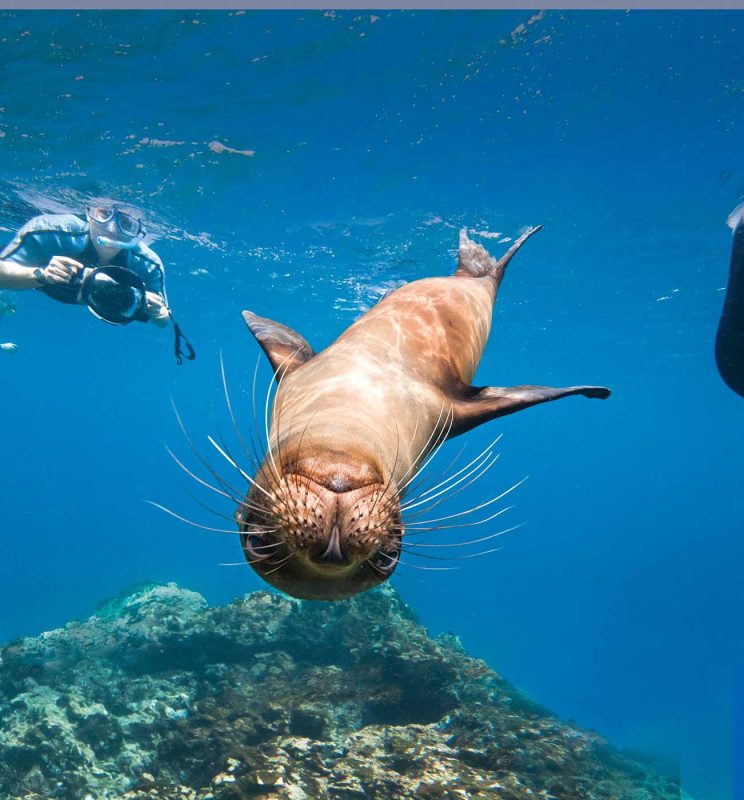
- Santiago Island: This is the place to see (and perhaps swim with) fur seals, and to observe marine iguanas.
- Fernandina Island: There is only one visitor site at this westernmost, most volcanically active and most pristine of the islands. Ferocious-looking marine iguanas, brightly colored Sally Lightfoot crabs, the world’s northernmost species of penguins, flightless cormorants and sea lions are among the diverse wildlife to be observed.
- Isabela Island: This largest island in the Galapagos is home to more than 6,000 people, many of whom work in tourism. The main town, Villamil, is considered the islands’ prettiest. It has many hotels and restaurants and is popular for pre- and post-cruise stay-overs. Land tortoises, sea turtles, marine iguanas and many species of birds can be seen at the designated shore-excursion sites, and some itineraries also include a tortoise breeding center. Isabela, sometimes called Albemarle, is the only island in the Galapagos crossed by the equator.
- Santa Cruz Island: This is the main tourist hub in the islands. Puerto Ayora, with some 12,000 inhabitants, is the archipelago’s largest town. Its Charles Darwin Research Center is included on many cruise itineraries. Other highlights include excursions to giant tortoise habitat in the mountainous interior, nesting areas for green sea turtles, and feeding grounds for many species of shorebirds, including flamingos.
- Plazas Islands: Of the two tiny islands off the east shore of Santa Cruz, only South Plaza has a visitor landing site (North Plaza is reserved for research). Red-billed tropicbirds, swallow-tail gulls and an iguana that is a cross between marine and land species are among the highlights, along with a colony of more than 1,000 sea lions.
- Baltra (South Seymour) Island: This volcanic speck just north of Santa Cruz was once a U.S. airbase and today is home to an airport connecting the Galapagos with the Ecuadorian mainland. A large colony of sea lions, as well as lava gulls and colorful crabs, easily can be observed from the sandy shoreline.
- Santa Fe (South Plaza) Island: Sea lions, land iguanas, scuba diving and trails leading to vista points with expansive views are the main attractions at the landing sites here.
- North Seymour Island: If you’ve been itching to get up close and personal with the prehistoric-looking marine iguanas for which the islands are so well known, this is the place. Blue-footed boobies and frigate birds are the other marquee species to be observed here.
- Bartolomé (Bartholomew) Island: This is perhaps the most visited and most photographed island in the chain, primarily due to iconic Pinnacle Rock and the presence of Galapagos penguins, the only wild penguin species on the equator. Great swimming, too.
- Santiago Island: Included on most itineraries, this uninhabited island is known for its colony of fur seals.
- Floreana Island: This island’s interesting human history includes a “post office” established by whalers in 1793. While the island has been greatly altered by human presence, shore excursions at two sites provide great snorkeling and opportunities to observe flamingos and sea turtles.
- Española (Hood) Island: The southernmost island in the chain is a classic shield volcano and home to a giant tortoise species rescued from the brink of extinction, as well as large populations of sea lions, lava lizards and blue-footed boobies. It is also the only breeding site in the world for the endangered waved albatross, whose nesting grounds are considered by many visitors to be the highlight of their Galápagos visit. The island has a beach for swimming and snorkeling.
Family-friendly trips to the Galapagos
If you plan to give your children the once-in-a-lifetime thrill of a visit to the Galápagos, you may want to choose a vessel offering special programming for them. Lindblad Expeditions, which teams with National Geographic for these kinds of expeditions, offers special kids-only programs, including photo workshops and hands-on science and conservation projects.
Before you go
Charles Darwin’s Voyage of the Beagle, an account of his momentous 1835 visit to the islands, is a very readable introduction to the observations behind his theory of natural selection, which rocked the Victorian world and continue to make waves in conservative religious circles.
Best bets for dining
The cruise lines provide meals as part of your itinerary. You'll also likely spend lunchtime on one or two days at restaurants in the towns, which serve local and international fare. In Puerto Aroya or other towns, don’t miss out on ceviche, lobster and other seafood specialties. Depending on the itinerary, you may also take your daytime meals on your cruise vessel. In the evening, swap tales over dinner with fellow ship passengers, some of whom may have gone on a different outing that day.
Best time to go
Cruises operate year-round. Weather is influenced by ocean currents, and what you’ll see in terms of wildlife activity varies according to the life cycles of individual species.
December to May is the warmer season, with daytime highs averaging in the high 70s to 80s. Afternoon showers are frequent, but the seas and wind are calmer. June to December is drier and cooler, with average daytime temperatures in the low 70s. During this season, the “garua” (fog) comes in, and seas are rougher. But hiking is more comfortable, and wildlife — particularly whales, whale sharks, dolphins and nesting albatross — are more active.
Wet season: The warm currents surrounding the islands December-April bringing calm seas, water temperatures in the 70s, daytime highs in the high 80s and sporadic rains. March is the hottest month and also the peak of the rainy season.
Dry season: Between May and November, the Humboldt and Peru currents arrive to plunge water temperatures into the 60s. Trade winds blow, a sea mist known as garúa sometimes sets in, and daytime temperatures are cooler, typically in the very comfortable lower 70s. Rain is infrequent.
High season: May, June and November to mid-January are the busiest months for tourism.
Fun (and not so fun) facts

- Charles Darwin arrived in the Galápagos aboard the HMS Beagle in September 1835, when he was 26 years old. He was not a scientist but a lapsed seminary student who came aboard the years-long surveying expedition as an amateur naturalist and social companion to the captain, Admiral Robert FitzRoy, also in his 20s. Darwin suffered terribly from sea-sickness and welcomed the opportunity during his five weeks in the islands to collect plants, rocks, birds and insects on solid land. He noticed that various species, finches and tortoises in particular, varied in appearance from island to island. His famous theory of natural selection, which holds that evolutionary change is derived through biological traits that become more or less common from generation to generation, was set out in his 1859 tome On the Origin of Species, and remains controversial in some quarters to this day.
- Ever since the first whalers arrived in the late 1700s and began harvesting tortoises and marine life, the islands’ delicate ecosystems have been increasingly threatened. Population pressures, poaching, tourism, politics, pollution, introduced species and global warming are among threats to the islands today.
Getting there
Cruises begin and end in the islands, and whether or not you arrange your flights or leave it to your cruise line, it’s advisable to arrive in Quito or Guayaquil, on the Ecuador mainland, at least two days in advance to avoid having your plans dashed by a canceled flight or other delay. It’s a 90-minute flight from Guayquil to the islands; add an hour if originating in Quito. Depending on your itinerary, you will fly in and out of airports on the islands of Baltra or San Cristóbal. Most visitors booked on a cruise or land tour are met by an escort and transferred to a departure point.
When you arrive
Docking information
On larger vessels, transfers from ship to shore are made by water taxi in port towns and by Zodiac or other inflatable craft at uninhabited visitor sites.
Getting around
Specific established areas on inhabited islands can be visited on your own. Otherwise, visitors are required to be accompanied by naturalist guides licensed at various levels of expertise. Some are trained only to enforce the rules (staying on designated paths, etc.), while others are highly educated experts in various biological fields. In general, top-tier guides are hired by top-tier cruise lines.
Need to know
Documents needed: U.S. and Canadian citizens need a passport and a transit card (arranged by your cruise company). In addition, all visitors must pay a $100 cash fee, earmarked for conservation, upon arrival. Because of concerns about counterfeiting, bills over U.S. $20 are not accepted.
Language: Spanish is Ecuador’s native language, but English is widely spoken in the islands and by tour guides.
Currency: The U.S. dollar replaced the sucre as legal tender in 2000.
Your take
Let's hear from you. Have you been to the Galapagos? Planning to go? I'd love to hear about your adventure or see your photos!
See anything wrong? What did we overlook? Be a co-creator!
Photos of Galapagos
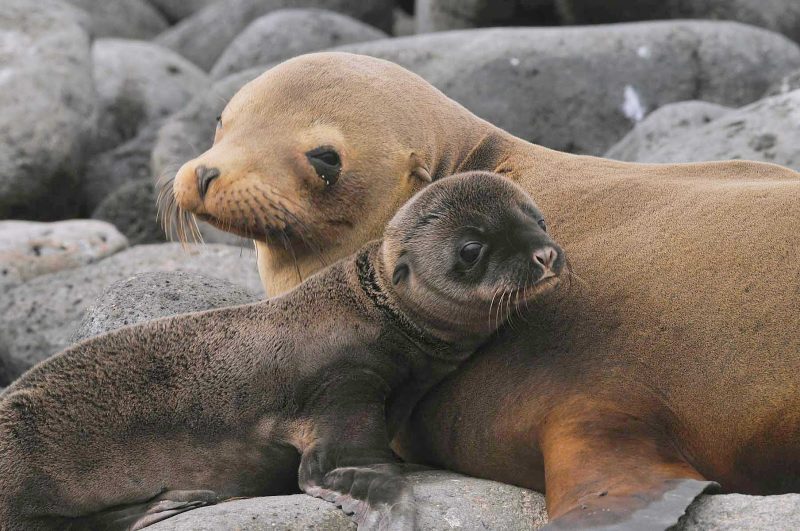
A sea lion and its pup, one of the close-up encounters possible when exploring the Galapagos. 
You can swim, snorkel or kayak with sea lions and marine iguanas right from Cerro Brujo, a pristine white coral beach. 
You can see the Galapagos's famed giant tortoises up close on a visit to the breeding and rearing center. 
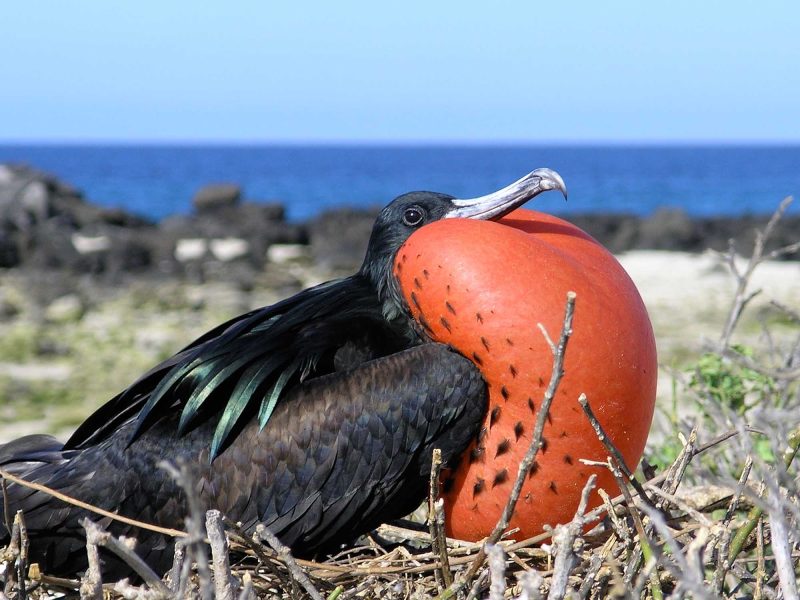
A male frigatebird, whose red pouch inflates during breeding season to attract a mate. 
Bartolomé has some of the most magnificent landscapes in the Galapagos during your Silversea cruise. While sailing the Galápagos Islands on a Lindblad Expedition, you'll be able to see flamingos and other local wildlife. 
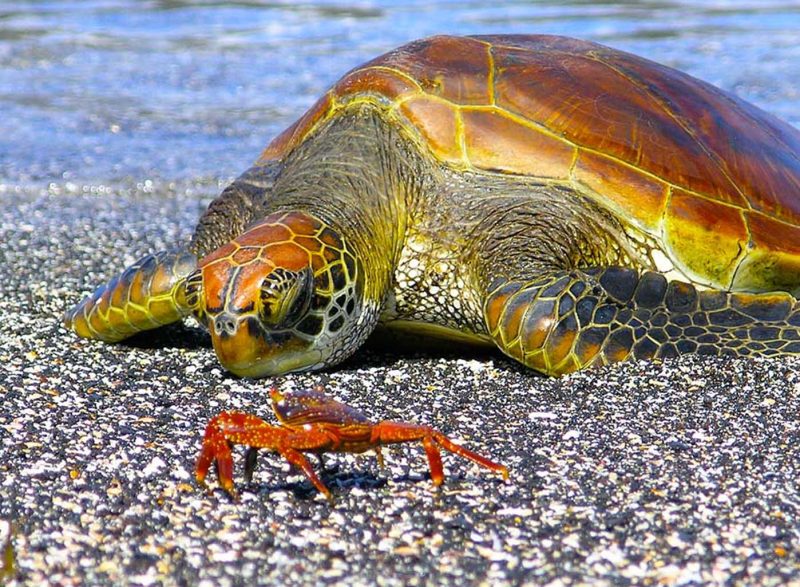
You'll likely spot the remarkably colorful Sally Lightfoot Crab — also known as the Nimble Spray, Short or Urchin Crab — during your sailing to the Galápagos Islands on a Lindblad Expedition. 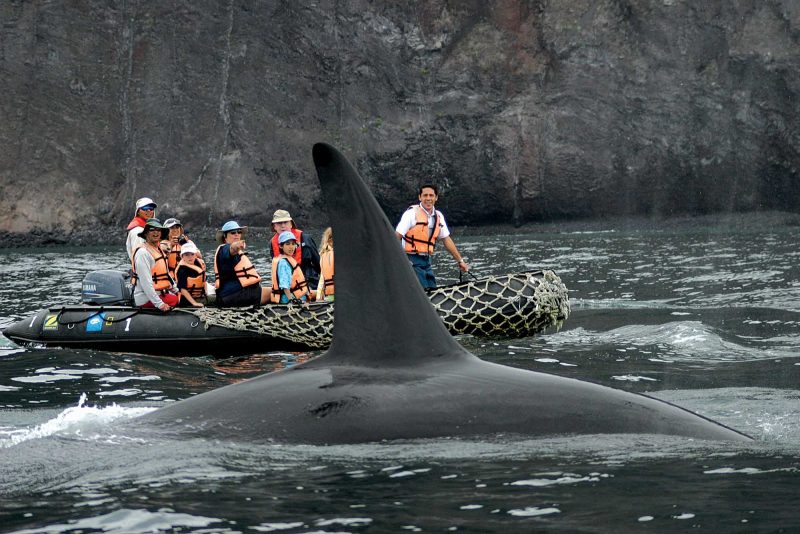
An orca whale rides alongside visitors in a Zodiac boat during a Lindblad tour of the Galápagos Islands. 
The Galapagos lizard, one of the critters guests might spot when exploring the Galapagos Islands. Wildlife is a huge part of itineraries in the region. 
When exploring the Galapagos, you'll likely to see sea lions loll about the coast. Isolated from the mainland for millions of years, it's one of the rare wildernesses where animals have no instinctive fear of humans, making for great photo opps. 
There is no place on earth like the Galapagos, created over the course of time by roaring volcanoes and titanic geothermic upheavals. 
A stunning red rock crab, commonly called a Sally Lightfoot, in the Galapagos Islands. 
You'll likely see a land iguana while adventuring the lands of Galapagos. 
Breathtaking sights await on your journey to Española Island in the Galapagos. 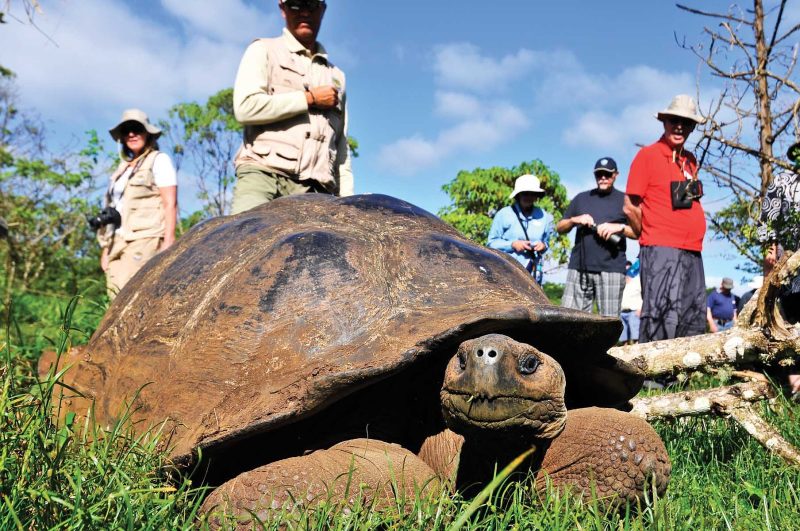
Ready for his closeup: A Galapagos giant tortoise doing his best Mr. Burns imitation. 
Wild flamingos, part of the Galapagos's enchanting landscape. 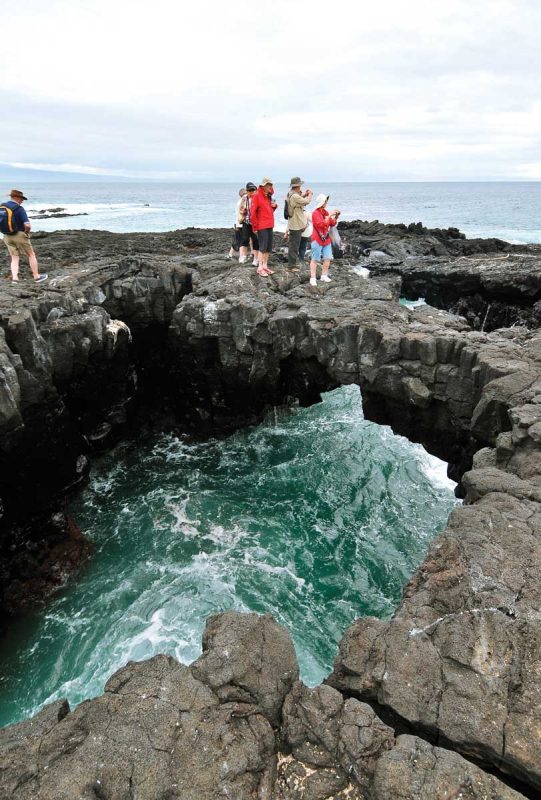
Silversea guests explore a crevice on Santiago Island in the Galapagos. 
A wild flamingo looks for a snack in the Galapagos Islands. 
A Galapagos sea lion in repose. 
While sailing the Galápagos Islands on a Lindblad Expedition, you will get the chance to see sea lions and other local wildlife. 
Blue-footed boobies, spotted in the Galápagos Islands during a Lindblad Expedition. 
Two adult waved albatrosses hug neck to neck at a breeding colony on Española Island in the Galápagos Island Archipeligo during a Lindblad Expeditions tour. 
A bluefooted booby mother lays with her two chicks during a Lindblad Expeditions visit of the Galápagos Islands. Christine Loomis: “I love this shot. Once the turtle starting swimming toward shore, all I had to do was lay on a rocky beach for a while and wait. The Galapagos are just zillions of photo ops waiting to happen.”
- 6 Night Galapagos Escape and Land Tour Next Sep 15, 2026 14 dates from $7,138
- 4 Night Peru and Galapagos Escape Next Sep 16, 2026 14 dates from $8,450
- 15 Night Exploring Galapagos Machu Picchu and Perus Land of the Inca and Land Tour Next Sep 18, 2026 23 dates from $16,029
- 15 Night Galapagos by Catamaran Machu Picchu and Perus Land of the Inca and Land Tour Next Sep 18, 2026 116 dates from $15,669
- 9 Night Exploring Galapagos and Land Tour Next Sep 18, 2026 23 dates from $9,060
- 9 Night Galapagos by Catamaran An Intimate Voyage and Land Tour Next Sep 18, 2026 116 dates from $9,450
Show 6 more
- 7 Night Exploring Galapagos Machu Picchu and Perus Land of the Inca Next Sep 19, 2026 23 dates from $16,029
- 7 Night Galapagos Escape and Land Tour Next Sep 19, 2026 25 dates from $7,497
- 7 Night The Galapagos Exploring the Inner Loop Next Sep 19, 2026 34 dates from $10,800
- 5 Night Galapagos Escape Next Sep 20, 2026 26 dates from $7,497
- 7 Night Galapagos Outer Loop Itinerary Next Sep 20, 2026 34 dates from $10,102
- 11 Night Peru and Galapagos Escape and Land Tour Next Sep 24, 2026 13 dates from $8,450
Showing the 12 soonest of 56 cruises.
Who sails here
Ships and lines that call at Galapagos
-
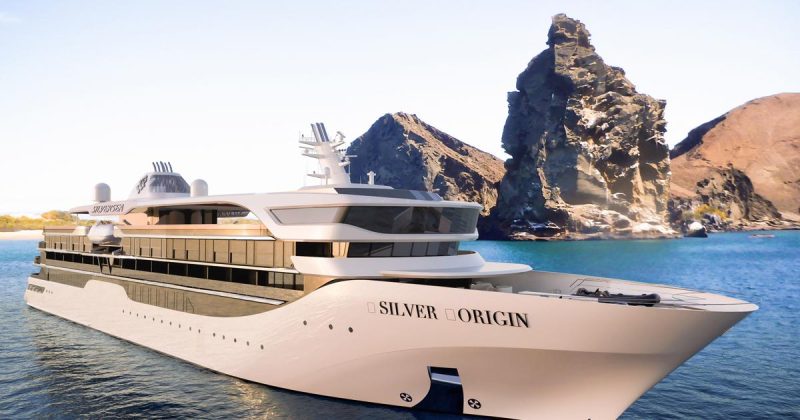 Silver Origin
-
 National Geographic Islander II
-
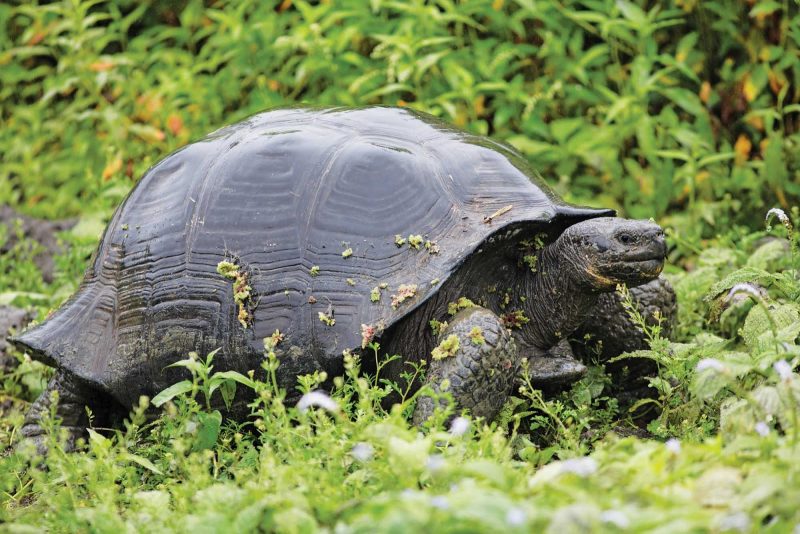 Celebrity Flora
- National Geographic Gemini
- National Geographic Delfina
-
 National Geographic Endeavour II
-
 La Pinta
-
 Delfin III
Cruise lines
Ports
Ports in Galapagos
- North Seymour Island Galapagos37
- Santa Cruz Island Galapagos33
- Baltra Galapagos32
- San Cristobal Island30
- Fernandina Island Galapagos27
- Floreana Island Galapagos26
- Isabela Island Galapagos25
- San Cristobal Galapagos20
- Caleta Tagus13
- Punta Vicente Roca13
- Baltra12
- Bahia Post Office11
- Daphne Island (galapagos)10
- Puerto Ayora Santa Cruz Island Galapagos7
- Bahia Elizabeth- Isabela
- Bartolome Island (santiago)
- Cerro Colorado reserve, Galapagos
- Espanola Island, Galapagos
- Galapaguera Cerro Colorado- San Cri
- Genovesa Island, Galapagos
- Islote Campion- Floreana
- Los Gemelos- Santa Cruz
- Playa Espumilla- Santiago
- Puerto Baquerizo, San Cristobal Island, Galapagos
- Punta Cormorant- Floreana
- Rabida Island, Galapagos
- San Bartolome (El Salvador)
- Santiago Island, Galapagos
- Wizard Hill- San Cristobal
Numbers are current cruises calling at each port.
Overheard
"A zoologist's dream, the Galápagos Islands afford a once-in-a-lifetime chance to witness animals found nowhere else on the planet. … No one who has walked among these unique creatures will ever forget the experience."
"One of the most memorable scenes was a white sand beach on Floreana, where I sat on a bed of volcanic rock amid scuttling Sally Lightfoot crabs, mesmerized by turquoise wavelets lapping the shore. It seemed like a vision of earth in its early, Edenic days, and of the world as it could be."
Want to see Galapagos from the water?
Tell us your dates and who is coming. Our partner travel agency replies with the itineraries that call there.