
Cruise terms & ship terminology glossary
A guide to help you navigate the jargon of the cruising world

Unless you're a cruise veteran, chances are you've come across the occasional term on a cruise or travel website that makes you wonder, Huh? What the heck does that mean?
The cruise landscape is riddled with insidery terms and strange lingo — but don’t feel intimidated! Here’s a quick guide to some of the terms you may encounter.
Come across a term that’s making you cross-eyed? Tell us and we’ll define it, add it to the list and credit you.
Get a handle on cruise terms
TERM
WHAT IT MEANS
adventure cruise
An adventure cruise, more commonly called an expedition cruise, caters to those seeking more off-the-beaten-path itineraries in places like the Galapagos, Antarctica, eastern Russia or Svalbard. The focus is on the experience at the destination — including viewing wildlife and scenery, kayaking, snorkeling, hiking or Zodiac excursions — rather than onboard activities. Ships range from the high-end Silver Explorer to Lindblad Expeditions, G Adventures and Hurtigruten. They're best for the agile, physically fit and flexible-minded.

aft
Aft refers to a location or direction — the rear section of a ship. The opposite of aft is forward.
all-inclusive
Some upper-tier cruise lines — Silversea, Crystal, Uniworld and others — tout their all-inclusive itineraries. It means you don't pay extra for specialty restaurants, for tipping, for drinks on board. Read the fine print, because some cruise lines cover certain costs while others don't.
alternative restaurant
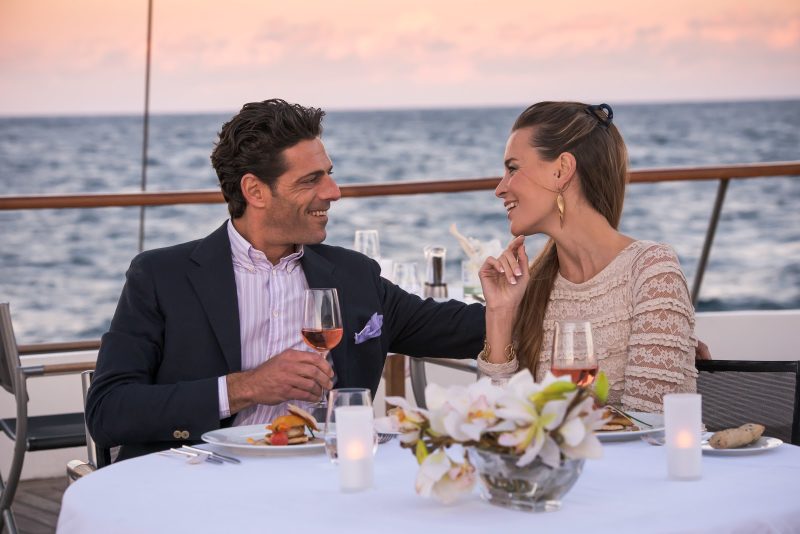
Your cruise fare covers the cost of the ship's regular dining rooms and buffets. On many ships you have the choice of dining at an alternative or specialty restaurant that offers a higher end or niche dining venue, generally for an additional price.

anti-rebating
Anti-rebating is a policy maintained by nearly all cruise lines that maintains a floor on pricing and prevents travel providers from engaging in price wars and client poaching. In short, the policy requires travel agents to charge the gross amount for a cruise fare when payment is made by the client’s credit card.
assigned seating
Some cruise ships give passengers assigned seating with fixed-time dining for their main dining rooms, letting you get to know the same fellow passengers for the duration of the cruise. Though this is becoming less common, a large ship might offer a first seating (main seating) and second seating. Other ships have open seating or "freestyle" or "anytime" dining, and some cruisers choose to dine in specialty restaurants without assigned seating.

atoll
An atoll (pronounced uh-TOLE) is a ring-shaped reef, island or chain of small islands formed of coral and encircling a lagoon.
atrium
The atrium of a mid-size or large ship is the central passenger area, equivalent to the lobby of a hotel. You'll find the reception desk, shore excursion desk and other guest services in this multi-deck, often glitzy area. Some ships call this area the foyer, lobby or Centrum.

beam
A beam is the width of a ship at its widest point.
berth
On a ship, a berth means a bed. In a port, it means where the ship is docked.
bespoke
An individually or custom-made product or service. Bespoke travel is a type of traveling in which a trip is designed specifically for a client with a focus on unique, highly local experiences.
booze cruise
A booze cruise is the term for a cruise, typically only a few days long, that features free or low-cost alcohol and where the vibe is all about partying and drinking both on the ship and in port.

bow
Bow is the front or forward section of a ship. (The rear section of a ship is the stern.)
calving
Calving is the break-up or splintering of a glacier or iceberg so as to produce a detached piece of ice.

canape
A canape (CAN-a-pay) is a small piece of bread or pastry with a savory topping, often served at a reception or to guests on a cruise ship.

Captain's table
On some ships, it refers to a dinner event in which select passengers are selected to dine with the ship's captain and other guests.
cay
Cay (pronounced key) is a small sandy island on the surface of a coral reef. The word is used almost exclusively to refer to islets in the Caribbean. Several cruise lines land for shore excursions at private cays.

cenote
Cenotes are natural swimming holes formed by the collapse of porous limestone bedrock, revealing a subterranean world of groundwater pools. Most cave cenotes have pure, clear, fresh water, perfect for swimming and diving.

Centrum
Centrum is the Norwegian name for atrium. Royal Caribbean uses the term for the atrium or hub of its ships, which often features not just reception desks but a lively area for high-wire aerial entertainment, performances and games.
charter
In a charter, or group booking, any group of individuals — relatives, a company, an organization — can charter all or part of a cruise ship.
Christmas market
During the holidays, river cruise lines offer itineraries of Christmas markets, or holiday markets, featuring town squares festooned with the traditional sights, smells and tastes of Christmas.

code orange, code red
In recent years, some cruise lines have adopted some informal terms to refer to norovirus outbreaks. Code Orange refers to early stages of a reported infection, where the buffet is no longer self-service but pools and public rooms remain open. Code Red refers to a wider outbreak of norovirus, which results in the closure of pools, whirlpools and self-service dining and requires the crew to scrub down all public areas each day. (Remember to repeatedly wash your hands.)
cruise card
A cruise card — also called a key card, cruise ship ID card, ship card and other names — is a plastic card the size of a credit card that is issued on embarkation day for several purposes: to allow entry and exit from the ship, to allow access to your room, to add purchases to your bill and for other uses.

cruise director
On larger ships, a cruise director heads up the ship's entertainment staff and often emcees events.
cruise to nowhere
A cruise to nowhere is a sailing in which a ship will sail in open waters for one to three days without reaching a destination. Guests get the chance to experience the amenities of a cruise, including its casino. These are popular choices for family reunions, romantic getaways, bachelor or bachelorette parties, girlfriend retreats or to get a quick casino fix.

cruiser
A passenger or guest on a cruise ship.
cruisetour
A cruise tour, or cruisetour (as the cruise lines call it), is a full land and sea vacation combining a cruise with a land journey before or after the cruise. Sometimes it comes with a host or guide.

debark/
debarkation
To leave a ship and go ashore is to debark. Most often it's used to refer to departing the ship at the end of a voyage. (By the way, definitely don't debark your dog!) Opposite: to embark.
disembark/
disembarkation
To leave a ship and go ashore is to disembark (though the proper term for leaving a ship — and not an airplane — is to "debark").
double occupancy
Double occupancy is a type of travel accommodation for two persons sharing the same room. On a cruise, the rate may be $500 per person, double occupancy, or $800, single occupancy, for a room. Some cruise lines offer special fares for solo travelers.
dry-dock
Dry-dock is the period when ships are taken out of the water so external surfaces can be cleaned and machinery can be serviced. A minor refurbishment may take a short time, while a major refurbishment can cost millions, last months and involve major upgrades to the entire ship.

duty-free shopping
There is no tax or duty due on goods purchased at a duty-free shop on a ship sailing in foreign waters. Passengers can purchase liquor, cigarettes, perfume, jewelry and electronics tax free. Goods for sale will depend on ship. The rules are different for air travel, where travelers can purchase goods at duty-free shops without paying tax on the items if they're on their way out of a country (usually a 48-hour window applies); U.S. citizens traveling by air are limited to $800 of duty-free merchandise.

embark/
embarkation
To board the ship is to embark.
enrichment
Many cruise ships offer enrichment programs, which let passengers sign up for short courses for self-improvement in art, cooking, digital photography, computers and other subjects, usually taught by art instructors, guest lecturers, chefs and other experts. Enrichment programs are sometimes free, often not.

expedition cruise
Expedition cruises, or adventure cruises, cater to those seeking more off-the-beaten-path itineraries in places like the Galapagos, Antarctica, eastern Russia or Svalbard. The focus is on the experience at the destination — including viewing wildlife and scenery, kayaking, snorkeling, hiking or Zodiac excursions — rather than onboard activities. Ships range from the high-end Silver Explorer to Lindblad Expeditions, G Adventures and Hurtigruten. They're best for the agile, physically fit and flexible-minded.
FIT
FIT is a travel industry acronym for Fully (or Freely) Independent Travel — that is, an individual or small group vacationing without a packaged tour. Some suppliers, such as river cruise lines, use FIT to refer to individual bookings as opposed to group travel.
flightseeing
Flightseeing is a form of sightseeing from the air, generally done in a small aircraft.

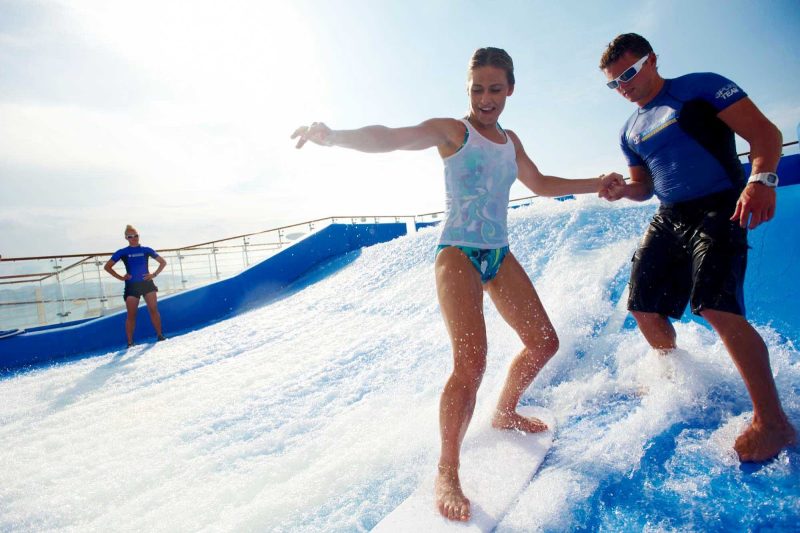
FlowRider
An onboard surf pool on some Royal Caribbean ships where guests can try their hand at surfing or boogie-boarding.
flyboard
flyboarding
A flyboard looks like a snowboard that you strap on to go flying over the water for sport. You mostly go straight up and down. It’s powered by water pumped through a hose connected to a Jet Ski. Also see: hoverboard and kiteboard, two other hydro-sports.

forward
Forward refers to a location or direction — the front section of a ship. The opposite of forward is aft.
Freestyle Cruising
Norwegian Cruise Line's style of cruising, featuring casual dress and no set dinner times or assigned seating in restaurants. The idea is that you can dine when, where and with whomever you want. Other cruise lines offer this as well. (Freestyle Cruising is a registered trademark of NCL Corp.)

French balcony
A French balcony is not really a balcony. It's a glass door or wall-to-wall window that opens to give you fresh air and the feel of a veranda, minus the veranda, tables and chairs. Many river ships (constrained by width limitations) use them to give the feeling of turning your cabin into a veranda.

funicular
A funicular is a cable railway in which a cable attached to a pair of tram-like vehicles on rails moves them up and down a steep slope. Travelers use them to ascend and descend steep walkways or to get to the top of hills, especially in some European cities.

funnel
A funnel is the smokestack on some cruise ships.
gateway
A gateway is a place or stop travelers use to reach their final destination. On an international trip from Miami to Rome, your gateway city might be Houston for the first leg of your journey to Miami.

GPS
GPS, or Global Positioning System, is a satellite navigation system that can be used to locate positions anywhere on the earth. It's widely used in mobile devices, vehicles, planes, ships — almost anything that moves these days.
gross registered ton (GRT)
A measurement of enclosed passenger space, including the space in cabins, lounges, showrooms and dining rooms. Although frequently misunderstood, GRT is a measure of volume, not weight.
holiday market
During the holidays, river cruise lines offer itineraries of Christmas markets, or holiday markets, featuring town squares festooned with the traditional sights, smells and tastes of Christmas.

home port
The port where passengers join a ship's cruises a majority of the time. Some ships make a home port out of Miami, Baltimore or Galveston, while other ships with more wide-ranging itineraries have no home port.
hosted cruise
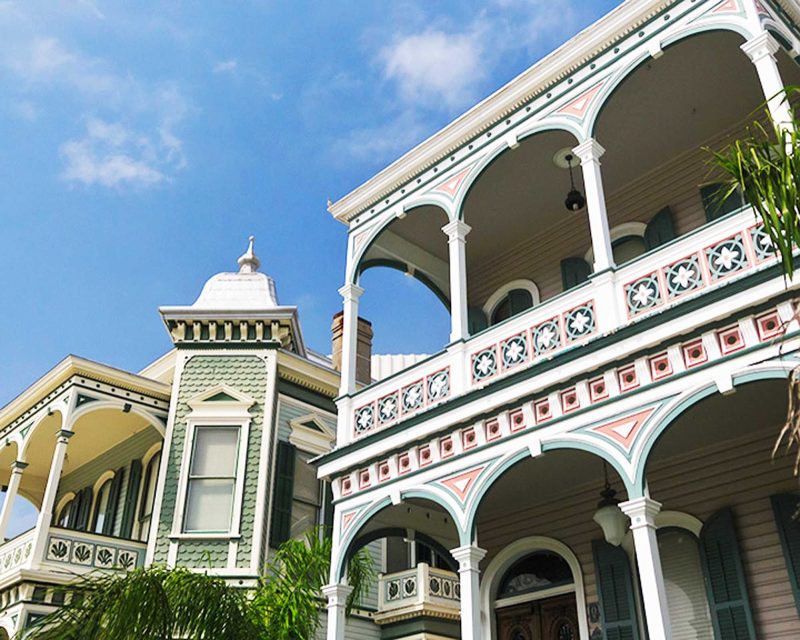
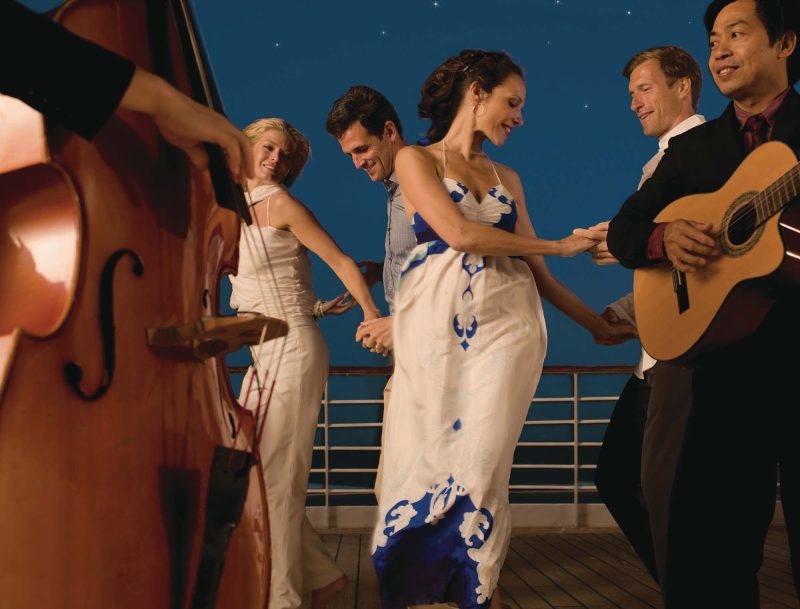
A hosted cruise, chiefly offered on certain sailings by luxury cruise ships, offers a personable expert who serves as a an onboard host and on-shore tour guide. It also comes with special perks such as a cocktail reception or shore excursion. All of this comes as part of your base fare. On a hosted cruise you get a more personal, in-depth, intimate experience on board and in port because there are no crowds or lines.
hoverboard
hoverboarding
As a water sport, a hoverboard lets you glide over the surface of the water. It’s powered by water pumped through a hose connected to a Jet Ski. You'll often find them in tropical destinations. Also see: flyboard and kiteboard, two other hydro-sports.

Inside Passage
The Inside Passage is a seagoing route along the U.S.-Canadian coast, extending from Seattle to Skagway, Alaska. It's a popular route for cruise ships.

inside stateroom
A stateroom that does not have a porthole, window or balcony.
International dateline
The International Dateline is an imaginary line running down the Pacific Ocean that separates one day from another. If it's 5 pm Monday in Los Angeles, it's already noon Tuesday in Sydney. When you travel from the United States to Australia, a day is "lost," but when you travel back, a day is "gained," and you'd set your watch back a day — so you get to relive the day again, like on "Groundhog Day."

kiteboarding/
kitesurfing
Kiteboarding, sometimes called kitesurfing or sailboarding, is a new extreme sport that combines windsurfing, paragliding and wakeboarding. It's especially popular in tropical climates. Sure looks fun!

knot
The measurement of a ship's speed. 1 knot = 1.15 mph on land, so 20 knots = 23 mph.
leeward
The side of an island (or ship) that is sheltered from the wind. In Hawaii, the leeward side faces west or south and is hot, dry, sunny; it tends to have more beaches than the windward side.

Lido deck
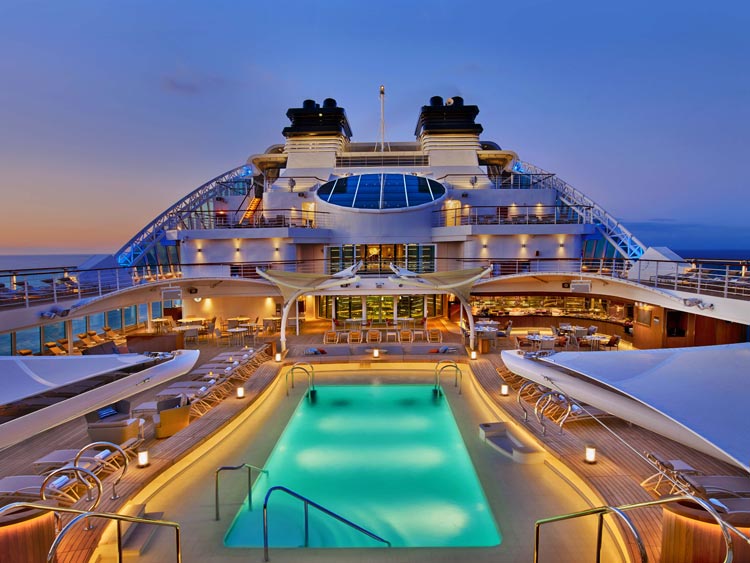
The open pool deck on a cruise ship, typically the top deck.
Loyalty program
Many cruise lines offer loyalty programs or past passenger programs that reward repeat customers. Benefits increase with frequency and perks might include shipboard credit, free laundry, get-togethers, etc.
Mbps
Mbps refers to megabits per second, a measure of how fast your Internet connection is. Today anything below 3 to 5 Mbps is pretty sluggish.
megaship
A megaship is one of the enormous cruise ships that are bigger than the biggest ships of just a few years ago. Any ship that carries more than 4,000 passengers can be considered a megaship.
Mexican Riviera
The Mexican Riviera refers to the string of popular cruise ports along Mexico's Pacific Coast, including Cabo San Lucas, Mazatlan, Puerto Vallarta and Acapulco.

Michelin
The "Michelin Star" is a hallmark of fine dining and top-tier restaurants based on the Michelin Red Guide, the oldest European hotel and restaurant reference guide, which awards Michelin stars for excellence to select establishments.

Mobile Passport
Mobile Passport is the first smartphone app authorized to expedite a traveler's entry process into the United States. This free app, available for Android and iOS phones, will allow you to submit your passport and customs declaration via your smartphone or other mobile device instead of using the traditional paper method. Only U.S. citizens with a valid passport and Canadian citizens traveling with both a valid passport and a B1 or B2 visa are eligible to use Mobile Passport. It currently works at 24 airports and one cruise port, Port Everglades.

moor
To hold the ship in place with lines at a berth.
muster
muster drill
muster station
To muster is to assemble the passengers and crew of a ship for a safety drill. A muster drill is typically done at the beginning of a cruise to instruct the guests about where to go to get into lifeboats in case of an emergency. A muster station is where everyone meets.

norovirus
Norovirus is the most common cause of viral gastroenteritis in humans, causing vomiting and diarrhea. To avoid it, wash your hands often and use the antiseptic gel available around the ship. Norovirus gets wide coverage in the media when an outbreak occurs on a cruise ship, though the Centers for Disease Control points out that your chances of coming down with norovirus are much greater on land — it affects 20 million people a year in all age ranges.

oceanview cabin
A stateroom with a porthole, window or balcony that overlooks the ocean.
onboard credit
A credit added to your onboard bill during your cruise. (Think of it as spending money, or as a credit on your credit card statement.) You might get it as a discount at the time of booking — say, as a thank-you from Cruiseable for booking with us — or from the cruise line as compensation for an unforeseen event. In general, onboard credits may be used toward the bar, spa, gift shop or shore excursions from the cruise line, but not gratuities. Also called a shipboard credit.

open seating
A dinner seating in which tables are not assigned — the opposite of assigned seating.
Owners Suite
An Owners Suite is a marketing terms for a high-end class of stateroom on a cruise ship, typically marked by a large living area, large separate bedroom and extra amenities. By the way, you don't really get to own it.
paddleboarding
On cruise excursions, stand-up paddleboarding refers to the water sport in which people stand on their boards and use a paddle to propel themselves through calm ocean waters. Traditionally it referred to the practice of kneeling on a paddleboard or surfboard to propel yourself through the surf with a swimming motion.

passenger capacity
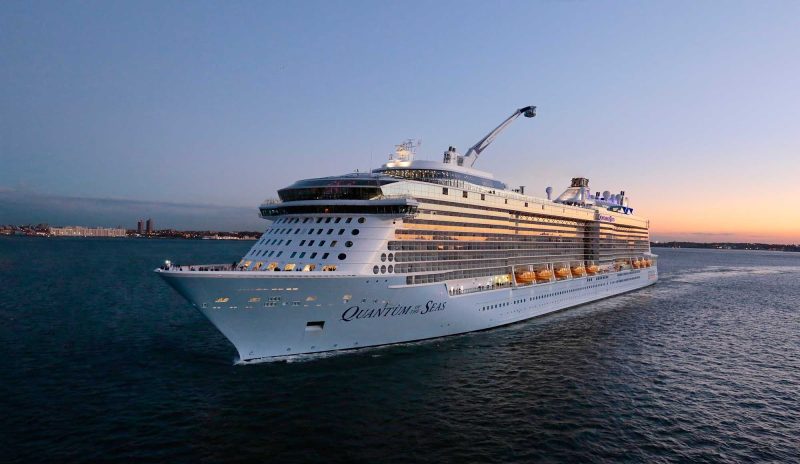
There are two ways to calculate the passenger capacity of a ship: (1) Double occupancy. One way is to take the total number of rooms and multiply by two, with two people sharing one stateroom (Cruiseable uses this method). (2) Maximum capacity refers to the potential number of passengers for a full sailing, given that ships add convertible sofas, pull-downs or rollaway beds. For instance, Quantum of the Seas has 4,180 passengers at double occupancy and 4,905 passengers at maximum occupancy. Most ships sail near or above capacity — the industry average is 104%.
passenger-crew ratio
Passenger to crew ratio indicates the number of crew members available to serve each passenger. The cruise industry is averaging a 2.5 passenger-crew ratio, meaning you’ll find 2.5 passengers for every crew member. Luxury cruises have the lowest ratio – you’re paying more for better service. See each ship's score.

passenger-space ratio
This term, which we also call the Roominess Index, refers to a ship's gross registered tonnage (a measure of volume, not weight) divided by the number of passengers, resulting in a blunt estimate of the total average square footage accorded each passenger in a ship's common areas, cabins, crew quarters, etc. A score of below 20 is poor; 20-30 average; 30-40 good; 40-50 very good; over 50 excellent. See each ship's score.
petit fours
Small bite-sized confectionery or savory appetizer (from the French for "small oven"), often found at resorts. Also see canape.

port
Port can mean (1) the port cities you visit on a cruise (also called ports of call); (2) port is the left side of the ship when you're facing toward the front of the vessel.

ports of call
The ports visited during your cruise itinerary, not counting the port of embarkation and disembarkation.

pre- or post-
This is travel agent jargon for adding a few days to the beginning or end of your cruise for sightseeing, usually at the port of embarkation or disembarkation.
promenade
Promenade refers to a deck big enough to allow passengers to walk around. On some ships the promenade serves as a jogging path, while on others it serves as a public space where you might encounter shops, restaurants or a carousel.

refurbishment
Refurbishment generally refers to an update to the décor on board, including layout changes and occasionally a wholesale makeover of the ship.
repositioning cruise
A repositioning cruise is a one-way itinerary that brings a ship from one region of the world to another — say, from the Caribbean to Mediterranean or Alaska to the South Seas — when a cruise season ends and another begins. (You'll often find bargains when booking a repo cruise.).
sailaway
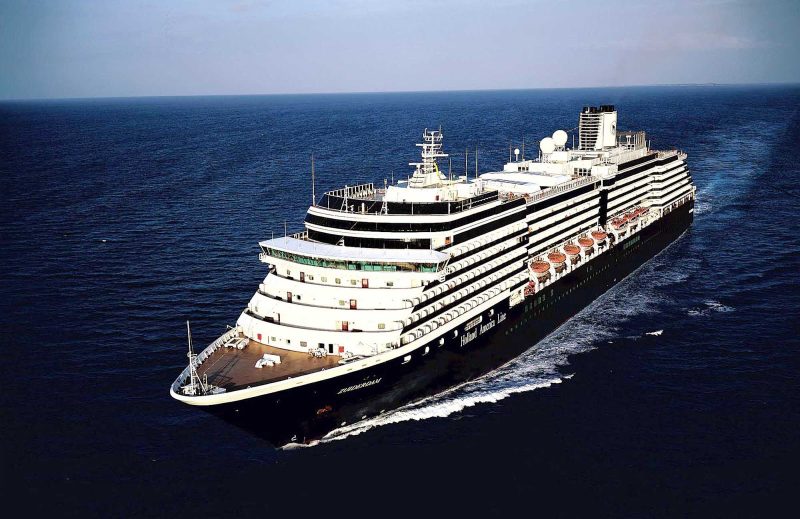
A sailaway has come to refer to both the beginning of a cruise vacation, when the ship leaves port (often accompanied by a sailaway party on deck), as well as departures during the cruise from scenic ports of call when passengers gather on deck to watch the ship depart.

sailing
A sailing is a cruise. Yes, it's still called a sailing even if the ship has no sails. But some do!
Sea-Band
Sea-Band is a knitted elasticated wrist band that can help prevent seasickness. It operates by applying pressure on an acupressure point on each wrist by means of a plastic stud. Because the bands don't contain drugs, they don't cause any of the side effects associated with anti-nausea drugs and can be used by adults and children. But not all people react favorably to Sea-Bands and some suggest they're counter-productive.

ship tour
Cruise lines regularly make their ships available for ship tours, sometimes called ship inspections or shipboard inspections, when the ship is in dock. The event, which lasts only a few hours, is invitation only and generally geared to travel agents and select guests. A ship tour provides agents with a way to stay abreast of the ship's current features and amenities. (A ship inspection for health or safety reasons, conducted by agents with the Coast Guard or Centers for Disease Control, is a different matter altogether.)

shipboard credit
A credit added to your onboard bill during your cruise. (Think of it as spending money, or as a credit on your credit card statement.) You might get it as a discount at the time of booking — say, as a thank-you from Cruiseable for booking with us — or from the cruise line as compensation for an unforeseen event. In general, shipboard credits may be used toward the bar, spa, gift shop or shore excursions from the cruise line, but not gratuities. Also called an onboard credit.

shore excursion
A tour or guided activity that passengers take part in while ashore. You can book an independent shore excursion or one arranged by the cruise line.

shoulder season
Shoulder season is a travel period between the high prices of peak season and the lousy weather of the low/off-speak season.
single supplement
An extra charge solo travelers pay (alas!) to have just one person stay in a stateroom. Some cruise ships waive the single supplement, or reduce it, for certain sailings. Many river cruise lines offer sailings that don’t cost extra for solo travelers.
skiff
A small, shallow, flat-bottomed open boat with a sharp bow and square stern, often used for shore or shoreline excursions. Also called a Zodiac or a launch.

smartship
A smartship refers to a new generation of cruise ships that have been built to include new digital technologies such as faster, more widespread Internet (usually including video streaming and online social sharing), faster check-ins, bracelets or medallions that communicate passenger preferences or allow people to make reservations or purchases, and other advances.

snuba
Snuba is one part snorkeling, one part scuba diving. It's a form of surface-supplied diving in which the swimmer uses swim fins, a diving mask, weights and an underwater breathing system.

specialty
restaurant
Your cruise fare covers the cost of the ship's regular dining rooms and buffets. On many ships you have the choice of dining at a specialty or alternative restaurant that offers a higher end or niche dining venue, generally for an additional price, but not always. For example, Oceania Marina has four free and two for-a-fee specialty restaurants.

stabilizers
Stabilizers are winglike retractable devices that extend from the sides of a ship to reduce roll and produce a more stable ride.
starboard
Starboard is the right side of the ship when you're facing toward the front of the vessel.
stateroom
The cruise industry's preferred term for cabin.
stern
The stern is the physical back end of a ship where ship names are often placed. (The front end of the ship is the bow.)

suite
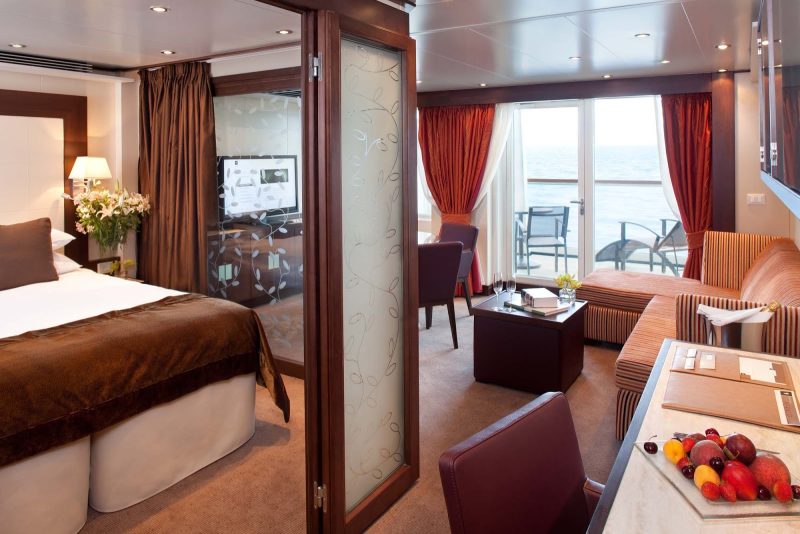
On a cruise ship, a suite typically refers to a top-of-the-line stateroom with separate sleeping and living areas.
tender
A small boat used to transport passengers from the ship to shore. Tenders are used when the harbor isn't deep enough for the ship to dock.

Thalassotherapy
A lot of upper-end cruise ships offer Thalassotherapy as part of a spa package. It refers to the therapeutic use of seawater and marine products to restore and remineralize the body. A lot of folks swear by it.

theme cruise
A theme cruise, sometimes called an affinity cruise, is one that's geared toward people with common interests, such as a particular kind of music (rock legends, groove cruise), sports, history, politics, cooking, wine, computers, stargazing and so on. There are even zombie cruises (watch out!).

tonnage
A measurement of enclosed passenger space, including the space in cabins, lounges, showrooms and dining rooms. Although frequently misunderstood, ship tonnage is a measure of volume, not weight.
towel animal
Room stewards on many cruises leave a towel animal in guests' rooms during their voyage as a way to put a smile on your face. Common towel animals depict swans, elephants, snakes and monkeys.

transatlantic cruise
A cruise that crosses the Atlantic Ocean, sometimes with longer itineraries, sometimes for repositioning cruises.
transfer
When you book a cruise, a transfer might be the bus ride from the airport to your cruise ship or from the ship to a hotel you’ve booked through the cruise line for a post-cruise stay. If you buy your air fare directly from the cruise line, it will often include transfers to and from the ship. Independent travelers can ask about paying extra for the ship-sponsored transfers.
trunk show
A trunk show is a short-term sales event that gives passengers the ability to buy merchandise not normally carried on board the ship. Diamonds and jewelry are popular items sold at trunk shows.

turnaround day
A turnaroud day is the day that a cruise ship is docked, usually in its home port, on the day of departure and the day of return. Imagine 5,000 or more passengers disembarking, another 5,000 getting on board with their luggage, new provisions that need to be loaded — it's a challenge for the crew!
turndown service
After housekeeping makes up a guest's room in the morning, a steward returns in the afternoon when the guest is absent to refresh the room, provide clean towels and perhaps leave a chocolate on your pillow, provide a corner folding of the bed blanket or leave a clever towel animal.

veranda
A fancy name for the private balcony that comes with many staterooms on the exterior of a ship.

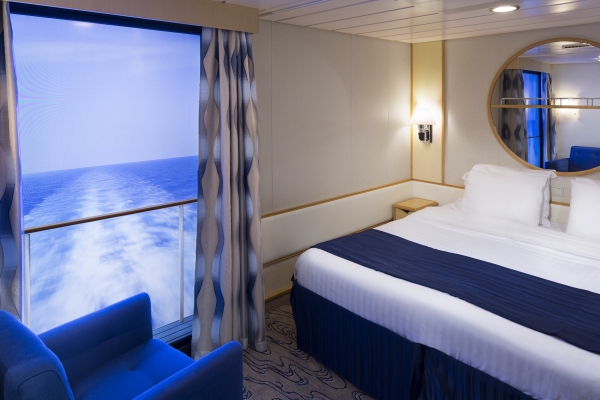
virtual balcony
Pioneered by Royal Caribbean, a virtual balcony is offered in interior cabins on its newer ships. It's a floor-to-ceiling 80-inch high-definition TV screen showing live views from the outside of the ship. Pretty cool! See the photo at top.
voluntourism
Voluntourism allows you to engage in tourism while doing meaningful work as a volunteer. Organizations like Projects Abroad and businesses like Carnival's Fathom enable travelers to spend part of their vacations doing volunteer work with local communities.

wakeboarding
The sport of riding on a short, wide board resembling a surfboard and performing acrobatic maneuvers while being towed behind a motorboat.

wave season
Wave season is a three-month period from early January to the end of March during which cruise lines and travel agents book a large number of cruises, based on the fact that a large number of cruisers book their sailings in the early months of the year and the cruise lines offer special deals.
whirlpool
A whirlpool, spa or Jacuzzi is a fiberglass or acrylic mini-pool filled with heated water with jets providing a swirling water action. Cruiseable uses the term whirlpool because spas refer to a treatment room aboard many ships, while Jacuzzi is a company that makes whirlpools and it's not a generic term for whirlpool. A hottub is something different altogether. Just relax and don't worry about it.

windward
The side of an island that is facing the wind, or the side of a ship against which the wind is blowing. In Hawaii, the windward side faces east or north and is moderate, lush and green, often with waterfalls and lush jungle.

world cruise
A cruise that can take 3, 4 months or longer and that sails around the world. The cool thing is that guests can choose to cruise the entire time or just on select one-way segments.
zipline/
ziplining
Ziplining is a thrilling outdoor activity during which a rider wears a harness that is securely connected to a cable suspended high above the ground. The rider then glides along the zipline cable for an exhilarating experience.

Zodiac
Zodiac is a brand of inflatable boats that are especially popular on luxury ships and expedition cruises and used as tenders. Sometimes also called a skiff.


Talk to a cruise specialist
Found the one? Let us plan it.
Tell us the ship, the dates and who is coming. A partner travel agent comes back with real fares and cabins, at no cost to you.